How to Turn a Bitcoin Conference Into a Tax-Deductible Adventure
Two teachers go on a summer trip to South Africa. Same flights. Same hotel. Same $3,500 cost. Teacher A comes home inspired but broke—with zero tax deductions. Teacher B deducts $3,200, creates 12 lesson plans that sell for years, gets 2 job offers, and turns the trip into months of content. Same trip. Totally different outcome. The difference? Strategic planning and documentation. I'm giving you the exact blueprint Teacher B used—the 90-day timeline, daily documentation system, and follow-through plan that makes your conference trip legitimately tax-deductible. Because there's no reason you can't be Teacher B on your very first trip.
BITCOIN CONFERENCES
Jerusha
10/29/202512 min read


Two teachers go on a summer trip to South Africa. Same flights. Same hotel. Same $3,500 cost.
Teacher A comes home inspired but broke, with zero tax deductions. Teacher B deducts $3,200, creates 12 lesson plans that sell for years, gets 2 job offers, and turns the trip into months of content. Same trip, totally different outcome.
The difference? Strategic planning and documentation.
Now imagine applying this to a Bitcoin conference. I’m giving you the exact blueprint Teacher B used, the 90-day timeline, daily documentation system, and follow-through plan that makes your Bitcoin conference trip legitimately tax-deductible.
This guide helps burned-out educators build location-independent income through crypto knowledge while saving on taxes. You’ll turn professional development into a fun, deductible getaway that feeds your digital products, from financial literacy lessons to crypto mini-courses. Clear plan, clean records, real results.
Your next conference can spark content that sells, reduce your tax bill, and give you fresh energy for the road ahead. Let’s make you Teacher B on your very first crypto adventure.
Unlock Tax Savings: Who Qualifies for Deducting Bitcoin Conference Trips?
You can turn a Bitcoin conference into a write-off if it ties to income you earn or plan to earn. The key is your work status and your intent. If you run even a modest side business, your trip can count as professional development, not a vacation. That single shift changes how the IRS sees your travel, and it can nudge your expat dreams into reach.
Self-Employed vs. Employee: Why Your Side Hustle Matters
If you are self-employed, even part-time, conference costs can be business expenses. You report them on Schedule C and reduce your taxable income. If you are a W-2 employee, unreimbursed work travel is not deductible right now. Your district can reimburse you, but you cannot write off those costs on your personal return.
This is why your side hustle matters. Your small digital business, like a crypto blog or online course for teachers, gives you a business purpose. You create content, you sell a product, you work with students or schools. That opens the door to deductions when the conference helps you earn.
A quick story: Mia is a 7th grade math teacher who started a crypto blog for educators. She posted twice a week, built a simple email list, and sold a $29 classroom mini-unit on Bitcoin basics. She booked a Bitcoin conference, emailed two curriculum companies for interviews, and mapped three days of sessions that matched her product. She deducted her ticket, three hotel nights, her airfare, and half her business meals. She came home with four new lesson packs and a webinar outline. The sales paid for the flight by October.
Want the expat life to feel closer? Business travel can do that. If the primary reason for the trip is your business, you can see a new city, meet people, and keep more of your money. You are not running from work, you are building it, which makes travel tax-smart.
Helpful signs you qualify:
You operate for profit, not as a hobby.
You market your work, like a site, email list, or course page.
You keep records, like receipts, agendas, and notes from sessions.
You separate money, like a business bank account or payment app.
Crypto Events as Business Boosters: What the IRS Allows
A Bitcoin conference is deductible when it improves skills you use to earn money. Teaching crypto in classrooms, creating online courses, selling lesson plans, tutoring, coaching teachers, or speaking all count. The event must be helpful and ordinary for your line of work.
You can usually deduct:
Airfare, if the primary purpose of the trip is business.
Hotel for business nights, your share only.
Conference registration and required workshops.
Local transport, like rides to the venue.
Internet fees needed for work.
Business meals at 50 percent, when you discuss work or travel for work.
You cannot deduct:
Family vacations or add-on leisure days that are not business.
Your partner’s or kids’ airfare and meals.
Sightseeing tours, spa visits, or souvenirs.
Upgrades for fun, like luxury suites that go beyond a reasonable stay.
Keep it simple. Book with your business purpose in mind, save receipts, and collect the agenda. Jot notes on how each session ties to your product or lesson plans. If most days are business days, airfare is usually deductible. If you add personal days, track them and only claim the business part.
Think of it like a lesson plan. Set your objective, gather materials, do the work, and show evidence. The conference fuels your income, the receipts tell the story, and your tax return reflects the work you did.
Plan Smart: Steps to Transform Your Bitcoin Trip into a Deductible Business Adventure
Think of this as a field study for your future income, not a getaway. You are gathering ideas, contacts, and proof of work that feed lessons, workshops, and digital products. When you plan with intent, your trip reads like business from the first email to the last receipt.
Pick the Perfect Conference: Matching It to Your Income Goals
Start with your offer, then pick the room. If you sell lesson plans, coach teachers, or run a crypto literacy blog, you need sessions that move that work forward. Look for tracks like crypto for educators, Bitcoin in classrooms, Web3 safety, and women in tech leadership. The room should feel like the 12 months you want to build, not a one-day thrill.
Strong 2025 picks include Miami and hybrid formats. The Blockchain Futurist Conference 2025 in Miami brings together builders, founders, and educators, with plenty of talk on product trends and policy shifts that affect classroom content and courses. If you want a women-centered space with workshops and community support, explore ETHWomen Florida 2025, which includes hybrid elements and mentorship that can shape educator-focused products.
Anchor your choice with a short business case:
“I teach financial literacy and sell crypto mini-units. This event covers current Bitcoin use cases, compliance, and security. I will create three new lessons, a webinar outline, and two lead magnets.”
“I coach teachers on tech integration. The women in Web3 track helps me secure guest experts and build a paid training series.”
Put that statement in your calendar invite and your notes. It shows why the trip is essential for staying current in crypto and for growing income tied to your business.
Build in Business Moments: From Networking to Note-Taking
A work trip looks like work on your calendar. Give each day a plan and a paper trail.
Morning plan: confirm meetups, scan the agenda, list two people to meet.
During sessions: take notes with timestamps, capture quotes, and jot action items. Tag each note with a product idea.
Between sessions: record a 60-second voice memo for your blog or course.
Late afternoon: meet one crypto educator or curriculum buyer. Ask three focused questions about their needs this semester.
Evening: write a short journal entry titled “Monetizable insights today.” List 3 to 5 ideas.
Add two fixed anchors to lock in the business purpose:
Pre-book 2 to 4 coffee chats with crypto educators or women in tech. Aim for collaborators who publish, teach, or buy curriculum.
Register for at least one workshop tied to a product you sell. Example: a security basics session that becomes a classroom safety module.
Quick prompts to keep you in builder mode:
“What problem did I hear today that my product can solve?”
“Which quote becomes a headline for my sales page?”
“What follow-up email can I send tonight?”
Those small moments stitch the trip into a clear work story, not a casual wander.
Budget Like a Pro: What Costs Count and How to Track Them
When your purpose is profit, your budget should look sensible and focused. Keep it clean, modest, and documented.
Allowable expenses to consider:
Airfare tied to business days.
Hotel for business nights, standard rooms only.
Conference registration and required workshops.
Local transport, airport rides, venue shuttles, transit passes.
Internet fees and SIMs used for work.
Business meals at 50 percent when tied to your travel or a work discussion. Add who, what, and why in your notes.
Printing, small gear, and supplies needed for sessions or meetings.
Smart tracking moves:
Use one business card for all bookings. No mix with personal splurges.
Save itemized receipts the moment you get them. A receipt app like Expensify, Evernote, or your bank’s tool can store PDFs and photos.
Create a simple folder system: 2025_Bitcoin_Conf/Receipts, Agenda, Daily_Notes, Contacts.
Title your notes with dates and outcomes, like 2025-06-14_Session_BitcoinSecurity_three_lesson_ideas.
Keep it modest to avoid flags:
Book coach, not first-class.
Choose mid-range hotels near the venue.
Skip add-ons that look like vacation perks.
Document personal days separately. Only claim the business portion.
Example that reads clean: three business days, one personal day. You claim airfare, three hotel nights, your registration, local transport for those days, and half of your documented business meals. You do not claim the personal day’s meals or activities.
Small habit, big payoff. When every receipt has a note, every day has a plan, and every plan ladders up to income, your trip tells a simple story. You went to learn, you built assets, and your records prove it.
Document Like a Detective: Essential Records to Secure Your Deductions
Think of this trip as a case file you build day by day. Every note, receipt, and follow-up is a clue that points to income. You are not proving perfection, you are proving intent and results. Simple, clear records do that job.
Daily Logs and Journals: Capture Every Business Win
Treat each day like a short field report. You are connecting sessions to products, people to partnerships, and ideas to future income.
What to log in 5 minutes, twice a day:
Session time blocks, titles, and speakers.
Conversations, who you met, and the topic.
Action items tied to your offer, not just inspiration.
Cash spent with a quick reason, like “business meal, product feedback.”
A one-line outcome, like “new lesson idea, follow-up email sent.”
Use a repeatable structure:
Agenda hits: the two sessions that feed a product.
People: names, roles, and next step.
Products: ideas that map to lessons, workshops, or downloads.
Proof: a photo of your badge, slides, or notes.
Example journal entry:
“Met Jane Doe, discussed crypto for K-12 curriculum, sparked idea for Etsy printable set on Bitcoin safety. Draft outline saved. Follow-up Thursday.”
“Security in classrooms session, 10:00 to 10:50. Pulled 3 lesson hooks for my unit. Recorded 60-second voice memo for blog.”
Keep it simple:
Title notes like 2025-07-12_Day2_Miami_Bitcoin_Ed.
Add quick tags: lesson, webinar, email list.
Screenshot your calendar and pin it to that day’s note.
Those small, dated notes tie your travel to income. They show why you went, what you learned, and how you used it.
Receipts and Proof: Organize for Tax Time
Receipts tell the story your memory forgets. Sort them as you go so tax time is a short task, not a hunt.
Categorize every receipt under three buckets:
Travel: airfare, hotel, local transport, airport SIM or Wi‑Fi.
Meals: business travel meals at 50 percent. Add who, what, and why.
Incidentals: printing, gear under your policy, day-of supplies.
What to write on each receipt:
Names and roles if it was a meeting.
Business purpose in a few words.
Session or product it supports.
Helpful tools:
Scan and auto-categorize with a receipt app. A current roundup of options is here, with pros and cons by feature set: Best Receipt Scanner Apps of 2025.
Save PDFs for e-tickets and invoices in dated folders: Receipts_2025/Travel, Meals, Incidentals.
Rules that keep you safe:
Keep records at least 3 years after you file the return for that year.
Store digital backups in two places. Cloud plus an external drive works.
Separate personal days. Do not mix those meals or activities into your claim.
Pro move: Add a one-line note to each receipt image: “Lunch with curriculum buyer, feedback on Bitcoin safety unit.” That tiny sentence can save an hour later.
After the Adventure: Follow-Through to Lock in Deductions
Within 90 days, turn raw notes into real outputs. This closes the loop. You did not attend for fun, you built assets that sell.
Your 90-day checklist:
Publish two to three public artifacts that tie back to the event:
A blog post with key takeaways tied to your product.
A short video lesson or webinar replay.
A mini-unit, template pack, or workshop outline.
Send three follow-up emails:
Thank you to speakers or contacts.
Collaboration pitch with a clear next step.
Ask for a quote you can use in your sales page.
Ship one paid offer update:
Add a new lesson, worksheet, or slide deck from a session.
Note it in your product changelog with the date of the conference.
Record outcomes:
“Published 2 posts, added 3 lessons, booked 1 paid training.”
Save screenshots of posts, product pages, and invoices.
Example, Teacher B style:
“Wrote a classroom series on crypto safety, inspired by Tuesday’s panel. Turned notes into 12 lesson plans and a parent guide. Posted a recap and linked the unit. First sale in week two.”
Keep your proof in one folder:
Outputs_2025/Blog_Posts, Videos, Product_Updates, Invoices.
Add a short summary file named 90_Day_Results.txt with wins and links.
You are not chasing perfect records, you are building a clean story. The notes, the receipts, and the shipped work show that your trip was for business and your business grew because of it.
Boost Your Income: Turn Conference Insights into Lasting Passive Revenue
You flew home with a bag of swag and a mind packed with moments. A speaker’s story about seed phrases. A hallway chat about classroom safety. That quick note you scribbled about wallet metaphors using lunch trays and library cards. These are more than memories. They are the seeds of products that can pay you long after the badge comes off.
Think of your notes as raw ore. With a little shaping, you can cast them into e-books, worksheets, and courses that sell while you sleep. Your conference gave you fresh angles and current language. That is what buyers want, not textbook dust.
Craft Digital Products from Your Notes
Start small, ship fast, and let your audience tell you what to build next. Your session notes and voice memos give you current examples, quotes, and frameworks that make your products feel alive, not generic.
Strong product ideas that teachers buy:
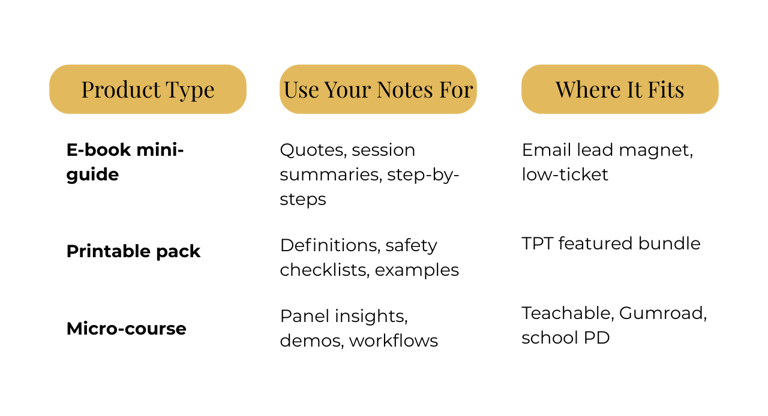
E-book mini-guides: “Teaching Bitcoin Basics in 5 Class Periods,” “Wallet Safety for Middle School.”
Printable packs: bell ringers, exit tickets, vocabulary cards, parent letters on crypto safety.
Online micro-courses: 60-minute workshops with slides, templates, and a quiz.
Why your conference notes win:
Real language from panels and Q&As makes your lessons sound current.
Concrete use cases turn abstract crypto into classroom moments.
Credible sources from speakers and workshops build trust with buyers.
A simple build plan:
Sort your notes by theme: basics, safety, careers, math tie-ins.
Turn each theme into a one-page outline with 3 to 5 takeaways.
Draft one small product per theme. Keep scope tight. Done beats perfect.
Add two classroom tests or prompts you heard on site, so it feels fresh.
Publish, collect feedback, update in 30 days.
Where to sell:
Teachers Pay Teachers is perfect for worksheets, guides, and slide decks. If you are new, this walkthrough on how to make products to sell on TPT shows the basics, from file types to previews.
Show demand by linking to existing crypto resources on TPT. The category for Cryptocurrency reveals what formats and price points are working right now.
Quick product examples pulled straight from conference learning:
“Bitcoin in Plain English”: a 20-page e-book for teachers, with three classroom demos.
“Wallets and Safety” worksheets: scenarios, vocabulary, and parent FAQs.
“Crypto Careers” slide deck: roles, pathways, and a writing prompt.
One-hour course: “Crypto Basics for K-8,” with slides, a script, and a quiz.
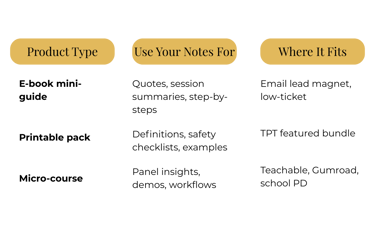
A tiny table to keep decisions simple:
Pro tip: pick one flagship product and three supporting mini-products. Bundle them later for a higher price without extra work. If you want a friendly walkthrough for launching a store, this practical Teachers Pay Teachers tutorial covers setup, listings, and previews.
Network for Opportunities: Connections That Pay Off
Your best leads often start as a five-minute chat in a loud hallway. Treat each contact like a door to a future paycheck. Write their name, what lit them up, and one way you can help.
Smart follow-up moves that bring money, not small talk:
Guest posts: Offer a 900-word piece tied to your product. Pitch one clear headline and the freebie you will include.
Partnerships: Co-create a unit, split revenue, and cross-promote to both lists.
Paid PD: Turn your e-book into a 60-minute teacher training with a certificate.
Job leads: Adjunct roles, curriculum writing, or workshop series for districts.
How to turn a chat into a co-created webinar series:
Send a same-day thank you with one crisp idea you discussed.
Propose a 30-minute call with three bullets: topic, audience, simple outcome.
Share a one-page outline, including title options and a rough schedule.
Offer to handle slides, registration, and the replay file.
Agree on revenue split or a flat fee. Keep it simple.
Sample follow-up note you can copy:
Subject: Idea from Tuesday’s safety panel
“Thanks for the conversation about wallet safety for middle school. I drafted a 3-part webinar outline: Part 1 basics, Part 2 safety scenarios, Part 3 parent comms. I can host, build the slides, and share the replay. Want to hop on a 20-minute call this week?”
What to track in your CRM or spreadsheet:
Name, role, session where you met, topic they care about.
Next step, due date, and the offer you pitched.
One quote you can use with permission in your sales page.
Payoff paths that often happen within 60 days:
A guest post that sends subscribers to your e-book.
A co-branded webinar that fills your course.
A paid training for a small district that funds your next trip.
Your notes turn into products. Your conversations turn into partners. Together they build a steady stream, the kind that hums along while you plan your next flight. Keep your follow-ups tight, your offers clear, and your file names tidy. The money follows the momentum.
Conclusion
Here is the blueprint in one breath: check that you qualify, plan with intention, document like it matters, then turn what you learned into income. The same trip can read like Teacher A or Teacher B on your return, and this path keeps you on the B track with clean records and products that keep selling. Pick your 2025 date now, maybe Vancouver in August for educator-focused sessions or Las Vegas in May for broader insights, and block the 90-day follow-through on your calendar.
Tell me your conference choice and product plan in the comments, or grab the free tax-travel checklist to set your steps in order. Your next Bitcoin conference can pay for itself, and then start funding the bigger life you have been sketching in the margins.