Nothing Is Real Anymore: How Creators Can Stay Authentic in the Age of AI
As AI-generated content becomes increasingly sophisticated, creators face a critical choice: how do we leverage these powerful tools without losing the authenticity that builds trust with our audiences? This article explores practical strategies for using AI to amplify—not replace—your genuine voice, drawing on lessons from luxury branding and fashion marketing to help women business owners navigate this new paradigm with intention and ethics.
Jerusha
1/19/20266 min read
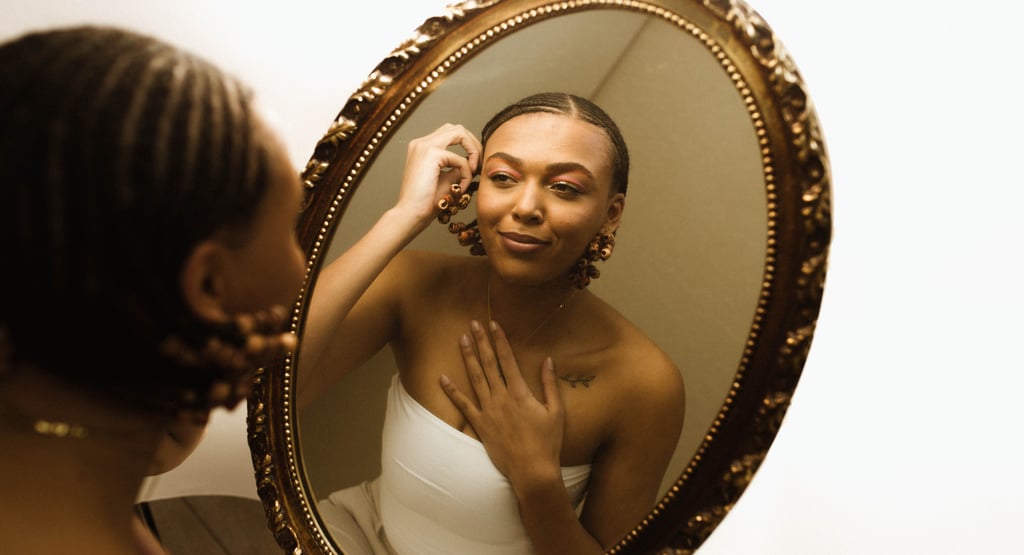
I recently came across an AI-generated video that stopped me mid-scroll. The detail was stunning—not just a flat image with moving lips, but fabric that moved realistically, lighting that shifted naturally, a person who seemed genuinely present. For a moment, I forgot it wasn't real.
And that's when it hit me: we're entering a phase where the line between authentic human content and AI-generated media is becoming increasingly blurred. For those of us building businesses as creators—especially women who've worked to establish genuine connections with our audiences—this raises an important question: how do we use these powerful tools without losing ourselves in the process?
The Deepfake Dilemma for Conscious Creators
As someone who spent years in fashion as a trend reporter and stylist, I've always been attuned to what's real versus what's manufactured. The industry has long played with perception—styled shoots, carefully curated brand narratives, aspirational imagery. But there was always a human at the center making deliberate creative choices.
Now? AI can generate entire videos of people who don't exist, wearing clothes that were never made, in locations that are completely fabricated. And while I find the technology fascinating and full of potential, I can't ignore the ethical considerations it presents for those of us who monetize through personal brand and trust.
The stranger things get with deepfakes going viral—those hyper-realistic AI videos with just a flat image as the source—the more questions arise. What happens when your audience can't tell if that's really you in the content? What happens when anyone can create a convincing replica of your image, your voice, your style?
For small independent filmmakers, content creators, and business owners, this isn't just a philosophical concern. It's practical. Our businesses are built on authenticity. People buy from us, work with us, and trust us because of the genuine human connection we've cultivated.
Conscious Capitalism Meets the AI Age
Here's what I've learned from working in marketing and PR within fashion, and now building Balance Muse: the psychology of trust hasn't changed, even as the tools have evolved.
When I worked with luxury brands, we understood something fundamental—people don't just buy products. They buy into a feeling, a lifestyle, an identity they want to inhabit. That's why authentic brand storytelling matters. That's why seeing real people genuinely loving and wearing something influences purchasing decisions more than any advertisement.
The same principle applies to how we as creators can ethically use AI tools. The question isn't "should I use AI?" but rather "how do I use AI in a way that enhances rather than replaces my authentic presence?"
I love what AI can do for small businesses. You can now create content more efficiently, automate routine tasks, even generate initial concepts or drafts. As I explore in my work teaching women about AI literacy, these tools can give independent creators leverage we've never had before—the ability to compete with larger operations without burning ourselves out.
But here's the critical distinction: AI should amplify your voice, not become your voice.
Building Authenticity Into Your AI Strategy
After working across fashion, marketing, and now digital business building, I've developed a framework I share at my retreats for women content creators. It's about balancing AI tools with human authenticity, and it starts with knowing yourself deeply.
1. Know Your Brand Essence (And Let AI Support It, Not Define It)
In fashion, we use frameworks like the Kibbe body typing system—which identifies style essences based on your natural lines and energy. There are seven distinct essences, each with its own personality and aesthetic. The point isn't to put you in a box, but to help you understand what naturally works for you so you can make intentional choices.
I apply this same thinking to brand building with AI. Before you start using AI to create content, ask yourself: what is my brand's natural essence? Are you more casual and approachable, or elegant and refined? Are you romantic and ethereal, or natural and grounded? Are you trend-forward, or classically timeless?
Once you know this, you can use AI tools like ChatGPT or Gemini to help you match your style essence in your content, your messaging, even your visual presentation. You might experiment with AI to see how different tones land with your writing. You might use it to brainstorm ways to stay true to your brand while exploring new content formats.
But the key is this: you make the final call. The AI doesn't decide who you are—it helps you express who you already are, more efficiently.
2. If You Love It, Live It (On Camera)
Here's a practical strategy I used in fashion that translates directly to building authentic content in the AI age: if you genuinely love a brand or product, show yourself using it. The key is that you've actually experienced it—worn it, tested it, judged the fabric and fit yourself.
Let's say you're a fashion and style influencer. You purchase clothing, try it on, and photograph yourself wearing it. You can give honest reviews about how the fabric feels, how it fits your body, whether it's worth the price point. Your audience trusts this because you actually put the clothes on.
Now, here's where it gets interesting with AI: authenticity doesn't always mean everything happened in the exact same moment or location. What matters is that the components are real. You really wore those clothes. You really visited that location. AI can help you blend those authentic elements in creative ways that would have been logistically impossible before—without compromising the truthfulness of your recommendations.
This is where AI can assist without replacing. You could use AI to help write compelling product descriptions, generate email sequences for your affiliate campaigns, create visually cohesive content from real elements, or even analyze which pieces might resonate with your audience based on past engagement. But the foundation—your genuine experience with the product—remains authentically human.
The psychological principle behind luxury branding works here: people want connection to something real. They want to feel like they're getting insider knowledge from someone who truly understands what they're recommending.
3. Know Your Ideal Client (And Create Accordingly)
One of the biggest traps I see creators fall into is comparison culture. You look at what other creators are doing—the AI tools they're using, the slick videos they're producing—and you think, "Maybe I should start doing that too."
But here's what I learned working in marketing: it's easy to get caught up comparing yourself to other creators, especially when you see them selling fully AI-generated content kits or promoting tools that promise to replace your presence entirely. You might think, "Well, maybe I should start using those too."
Then you remember: you have a much bigger mission. You're not just trying to chase trends or build a quick funnel. You're creating something sustainable.
For me, that bigger mission is about teaching women how to build calm, ownership-based wealth using AI and digital assets—work I do through in-person workshops where we explore crypto, AI literacy, and business strategy together. That kind of work requires high trust. It requires people knowing that when I recommend something, it's because I've tested it, believe in it, and have seen real results.
So before you adopt every new AI tool or trend, ask: does this serve my ideal client? Does this align with the transformation I'm trying to create? Or am I just reacting to what I see others doing?
The Practice of Ethical AI Use
If you wear a certain brand consistently and absolutely love it, consider creating AI-enhanced content that features you wearing that brand. Use real videos or photos of you that might be edited, color-corrected, or optimized using AI tools. Then match the feel and tone of your brand in any supporting materials—graphics, captions, email copy—using AI assistance.
But—and this is crucial—do not put the brand's name in your AI-assisted ads or promotional content unless you're already in a sponsorship agreement with them. Practice building that authentic connection first. Find similar brands that might need promotion and pitch them with your track record of genuine advocacy.
This way, you're always honestly promoting what you actually love and use, while leveraging AI to make the production process more efficient and scalable.
My Answer to the Fear Question
People often ask me: are you excited or terrified by AI video capabilities?
I'm excited! But I understand why many people are afraid, and I recognize that some will use these tools with malicious intent. That's been true of every powerful technology throughout history.
What I focus on is what we can control as individual women building businesses: our choices, our ethics, our commitment to showing up authentically even when the tools get more sophisticated.
If you disagree with me—if you think I'm missing something critical about the risks or the opportunities—I genuinely want to hear it. These conversations matter. We're all navigating this shift together, and the more we share our perspectives, the better equipped we'll be.
Moving Forward With Intention
The world is changing rapidly. Technology is evolving faster than our social systems can always adapt. But that doesn't mean we have to lose ourselves in the process.
As creators, business owners, and women building wealth on our own terms, we have an opportunity to use these tools consciously. To let AI handle the repetitive, time-consuming tasks while we focus on the irreplaceable human elements—genuine connection, creative vision, ethical decision-making.
Nothing may be "real" in the way it used to be. But your voice, your values, and your commitment to authenticity? Those can remain the realest things about your brand.
Want to explore how to build a sustainable business using AI while maintaining your authenticity? Subscribe to my YouTube channel for practical demonstrations and insights, or sign up for my free newsletter at balancemuse.com/connect for updates on upcoming retreats and resources.